Arnica (Arnika)
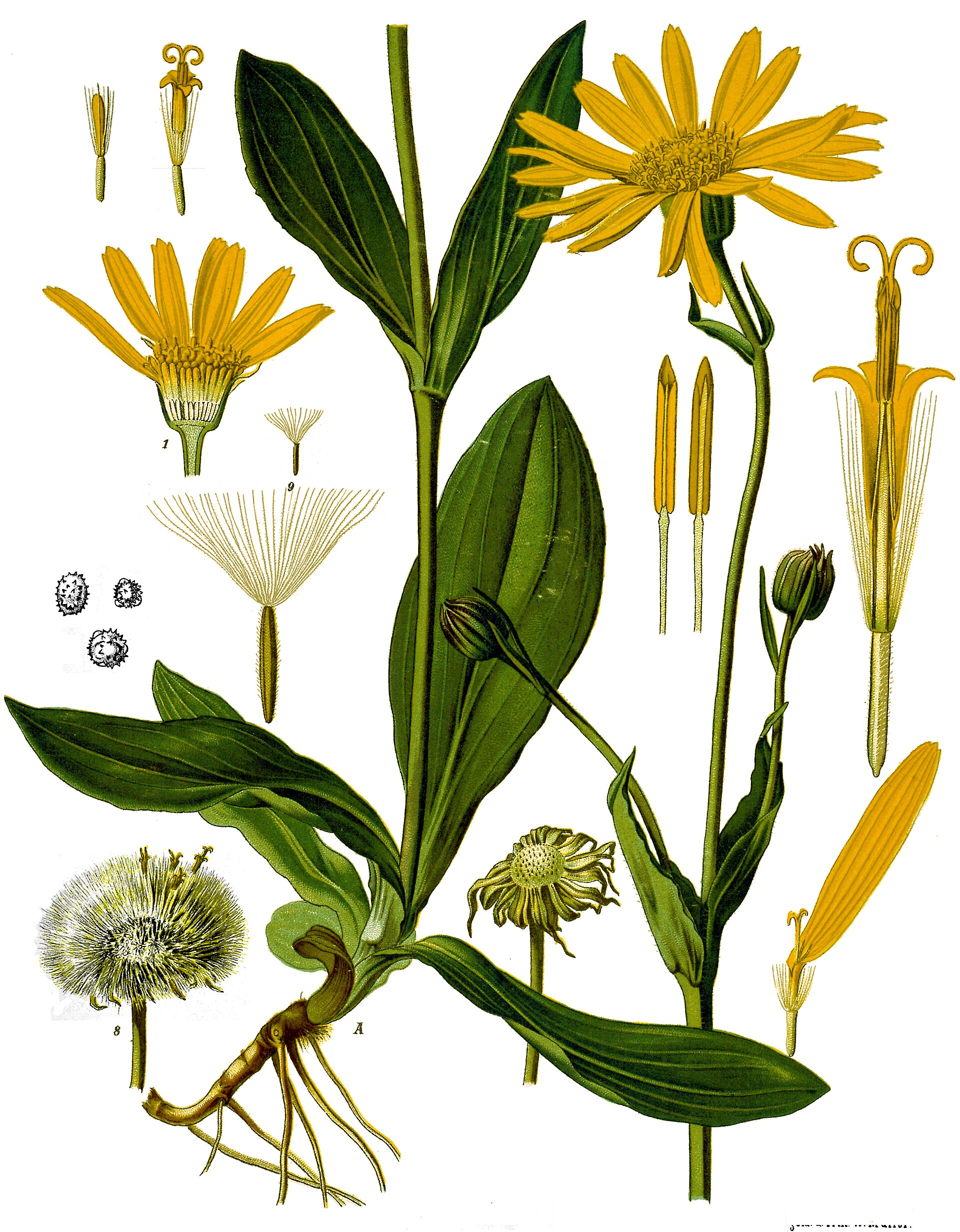
Arnica montana
Arnica
Arnika
Arnica
Arnica montana
Traditionally used
⚠ For the skin only — never take internally; it is toxic if swallowed. Do not apply to broken skin. TOPICAL ONLY: bruises, muscle pain, sprains, swelling after trauma, superficial phlebitis. NOT for internal use (toxic).
Prepared as
Flower heads
Chemistry
Sesquiterpene lactones (helenalin, dihydrohelenalin) — anti-inflammatory, anti-edematous. Flavonoids, essential oil. TOXIC internally: cardiac arrhythmia, GI hemorrhage.
In three languages
Kreyòl — ⚠ Pou po a sèlman — pa janm bwè l, li toksik si w vale l. Pa mete l sou po ki kase. LOKAL SÈLMAN: blé, doulè miskilè, antòs, anflamatyon. PA pran pa bouch (toksik). Arnika disponib nan diaspora ayisyen kòm pommad oswa jèl pou frape, bleso miskilè, ak antòs. Janm itilize an entèn — po sèlman.
Français — ⚠ Usage cutané uniquement — ne jamais l'avaler, c'est toxique par voie interne. Ne pas appliquer sur une peau lésée. USAGE TOPIQUE UNIQUEMENT : ecchymoses, douleurs musculaires, entorses, gonflements post-traumatiques, phlébites superficielles. NE PAS prendre par voie orale (toxique). L'arnica est disponible dans la diaspora haïtienne sous forme de pommade ou gel pour les contusions, douleurs musculaires et entorses; jamais prise en interne — usage externe uniquement.
Safety
Safety notes for this plant are still being written. Until they are, treat it with a cautious hand.
Plants can look similar and be misidentified — always verify with a local herbalist or guide before use.
Kept alongside
- Sesame
- Caribbean princewood
- Bay rum tree
- Balloon vine
- Jimsonweed
- Hispaniolan pine
- Dwarf elder
- Feverfew
- Jequirity (rosary pea)
- Goat head
More on Haitian plant medicine