Scarlet milkweed (zèb madan Bouven)
Asclepias curassavica
Scarlet milkweed
zèb madan Bouven
Herbe Mme Bouvin
Asclepias curassavica
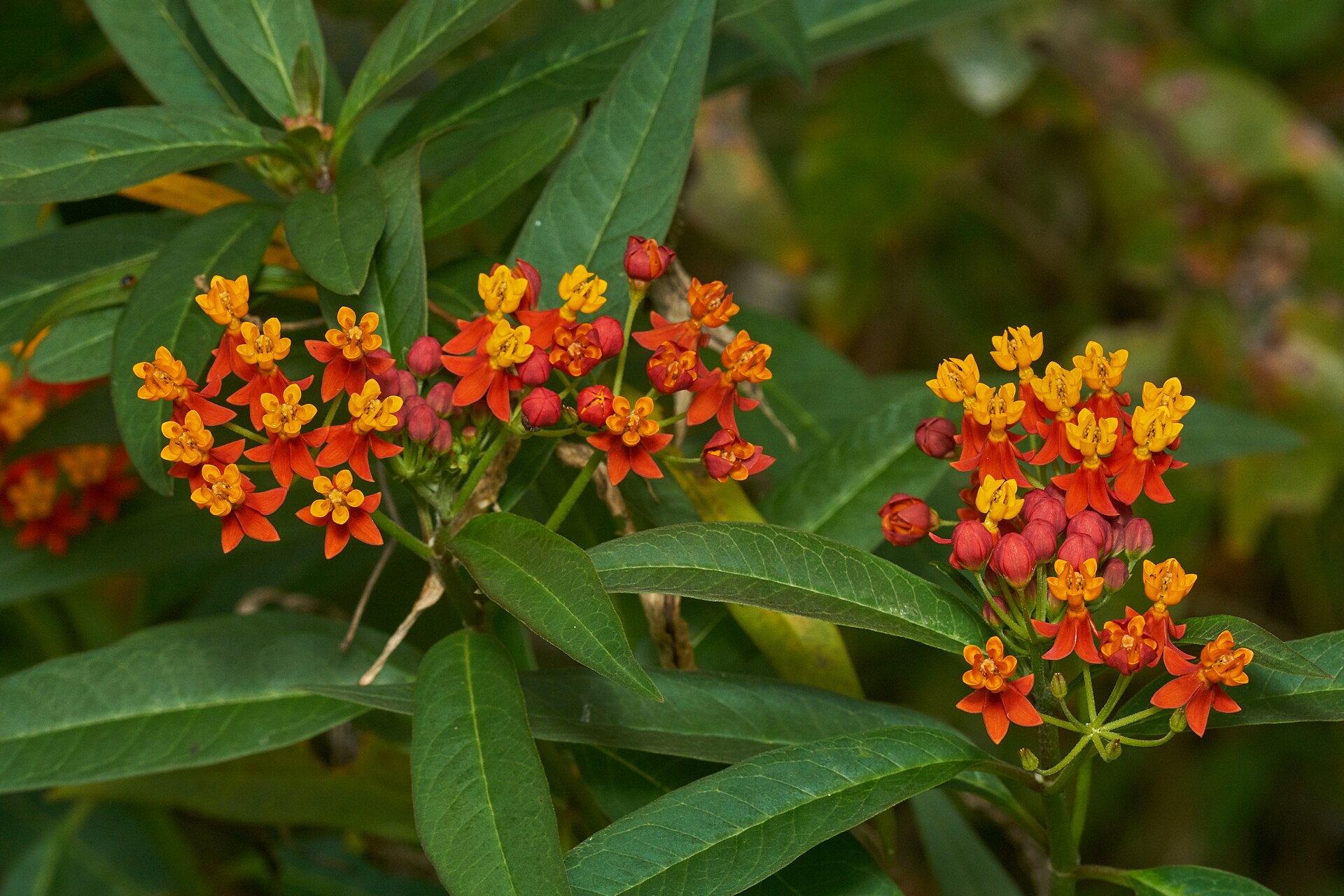
Traditionally used
⚠ Whole plant is toxic — cardiac glycosides can disturb the heart and the latex irritates skin and eyes; never ingested without expert guidance. Used mostly externally for respiratory ailments, skin infections, intestinal worms, fever, wounds, digestive complaints, and inflammation.
Prepared as
No preparation is recorded for this plant. The archive holds no safe way to take it internally; it is kept here for identification and for knowing what to avoid.
In three languages
Kreyòl — ⚠ Tout plant lan toksik — glikozid kadyak yo kapab deranje kè a epi lèt la irite po ak je; pa janm vale l san konsèy yon ekspè. Itilize sitou sou po a pou pwoblèm respirasyon, enfeksyon po, vè nan vant, lafyèv, blesi, pwoblèm dijesyon, ak enflamasyon.
Français — ⚠ Toute la plante est toxique — les glycosides cardiaques peuvent perturber le cœur et le latex irrite la peau et les yeux ; jamais ingérée sans l'avis d'un expert. Utilisé surtout en externe pour les affections respiratoires, les infections cutanées, les vers intestinaux, la fièvre, les plaies, les troubles digestifs et l'inflammation.
Safety
No preparation is recorded for this plant. The archive holds no safe way to take it internally; it is kept here for identification and for knowing what to avoid.
Plants can look similar and be misidentified — always verify with a local herbalist or guide before use.
Kept alongside
- Sapodilla
- Onion
- Turkey berry
- Calotrope
- Star apple
- Rattlebox
- Bitter melon
- Meadowsweet
- Sweet broom
- Calabash tree
More on Haitian plant medicine