Lavender (lavann)
Lavandula angustifolia · Lamiaceae
A crossing plant — kept in both Haitian & Caribbean and Adriatic & Balkan traditions. Two shores, one root.
Lavender
lavann
Lavande
Lavandula angustifolia
Lavanda
Lavandula officinalis
Lamiaceae
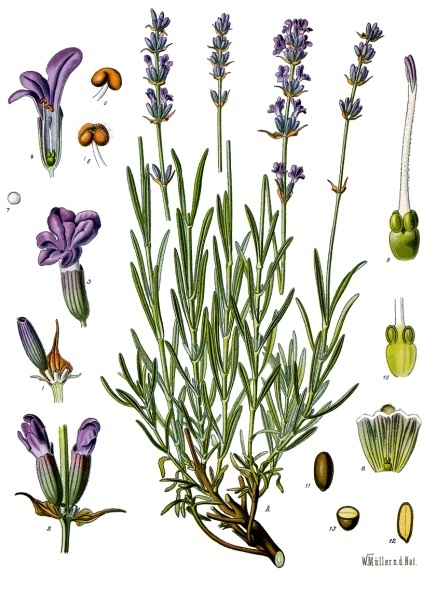
Botanical note
In Bosnia lavender is a cultivated plant, not a wild one — GBIF holds no wild Bosnian records; it grows in planted fields around Međugorje, Stolac old town, and Koćuša waterfall. Flowers June to August.
Traditionally used
Lavender is a quieting herb whose fragrant oil settles the nerves and eases the digestion. An infusion of the flowers is taken for restlessness, nervous palpitations, and tension headache, and it blends well with mint and valerian in a calming tisane. It also loosens spasm in the breathing passages and can be used as a warm compress over troubled skin.
On the Adriatic shore
Čaj od lavande: žlica sušenih cvjetova na 200 ml, 10 min. Za anksioznost, nesanicu. Aromaterapija: jastučić ili difuzor. Razrijeđeno ulje za kožu.
In three languages
Kreyòl — Lavann yo itilize kòm yon kalman dous pou kalme enkyetid, ankouraje bon dòmi, ak diminye mal tèt ki gen rapò ak tansyon. Pwopriete antiseptik ak anti-enflamatwa li yo fè li enpòtan pou geri ti blesi, boule, ak iritasyon po yo.
Français — La lavande est une plante apaisante dont l'huile parfumée calme les nerfs et facilite la digestion. On prend une infusion des fleurs contre l'agitation, les palpitations nerveuses et les céphalées de tension ; elle s'associe bien à la menthe et à la valériane dans une tisane calmante. Elle dénoue aussi les spasmes des voies respiratoires et s'emploie en compresse tiède sur une peau irritée.
Safety
Safety notes for this plant are still being written. Until they are, treat it with a cautious hand.
Plants can look similar and be misidentified — always verify with a local herbalist or guide before use.
Sources & lineage
European phytotherapy / Commission E — volatile oil (linalyl acetate)
Kept alongside
- Broad-leaved thyme
- Water mint
- White Dead-nettle
- Wood betony
- Yellow Archangel
- Masterwort
- Bitter Milkwort
- Garden angelica
- Lungwort
- Buttonsage