Fig (Fig)
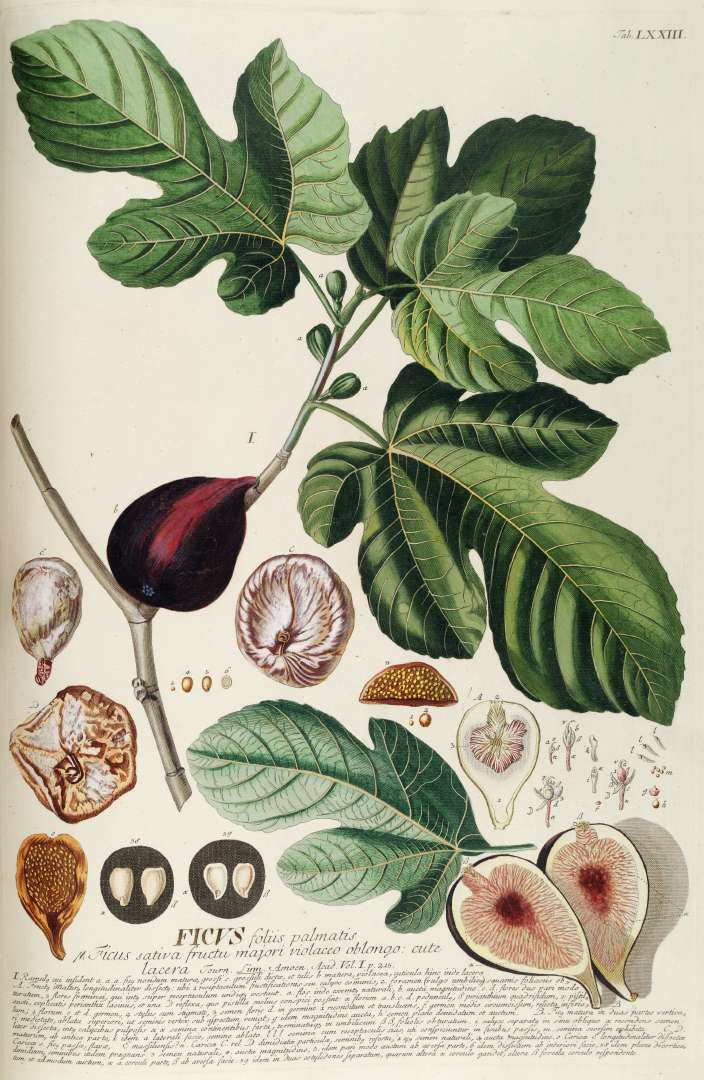
Ficus carica · Moraceae
A crossing plant — kept in both Haitian & Caribbean and Adriatic & Balkan traditions. Two shores, one root.
Fig
Fig
Figuier commun
Ficus carica
Smokva
Moraceae
Traditionally used
Fig leaves and fruits have been traditionally used to support digestive health, particularly for constipation and as a general digestive tonic. The milky latex from leaves is applied topically for skin conditions, while leaf preparations are used for respiratory ailments and sore throats.
On the Adriatic shore
Odvar od smokava: 3–4 suhe smokve na 250 ml, kuhati 10 min. Za zatvor, kašalj, grlo. Svježi mliječni sok smokve: bradavice (poklopiti, izbjegavati sunce).
Prepared as
Fresh or dried fig leaves are prepared as a decoction by simmering 1-2 tablespoons in water for 15-20 minutes. The milky latex is applied directly to skin conditions when fresh leaves are broken.
In three languages
Kreyòl — Fèy ak fwi fig yo tradisyonèlman yo itilize pou sipòte sante dejesyon an, sitou pou konstipasyon ak kòm yon tonik dejesyon jeneral. Lèt blan ki soti nan fèy yo aplike sou po a pou maladi po, pandan y ap itilize preparasyon fèy yo pou pwoblèm respirasyon ak mal gòj.
Français — Les feuilles et fruits du figuier sont traditionnellement utilisés pour soutenir la santé digestive, particulièrement pour la constipation et comme tonique digestif général. Le latex laiteux des feuilles s'applique localement sur les affections cutanées, tandis que les préparations de feuilles sont utilisées pour les troubles respiratoires et les maux de gorge.
Safety
Safety notes for this plant are still being written. Until they are, treat it with a cautious hand.
Plants can look similar and be misidentified — always verify with a local herbalist or guide before use.
Sources & lineage
Insular Pharmacopoeias (PMC8138454); Dalmatian ethnobotany; PubMed Ficus carica review
Kept alongside
- Chicory
- Creeping thistle
- Burdock
- Sweet broom
- Blessed thistle
- Spreading hogweed
- Lady's Bedstraw
- False daisy
- White Mustard
- Creeping Cinquefoil