Field horsetail (Prèl chan)
Equisetum arvense
A crossing plant — kept in both Haitian & Caribbean and Adriatic & Balkan traditions. Two shores, one root.
Field horsetail
Prèl chan
Prêle des champs
Equisetum arvense
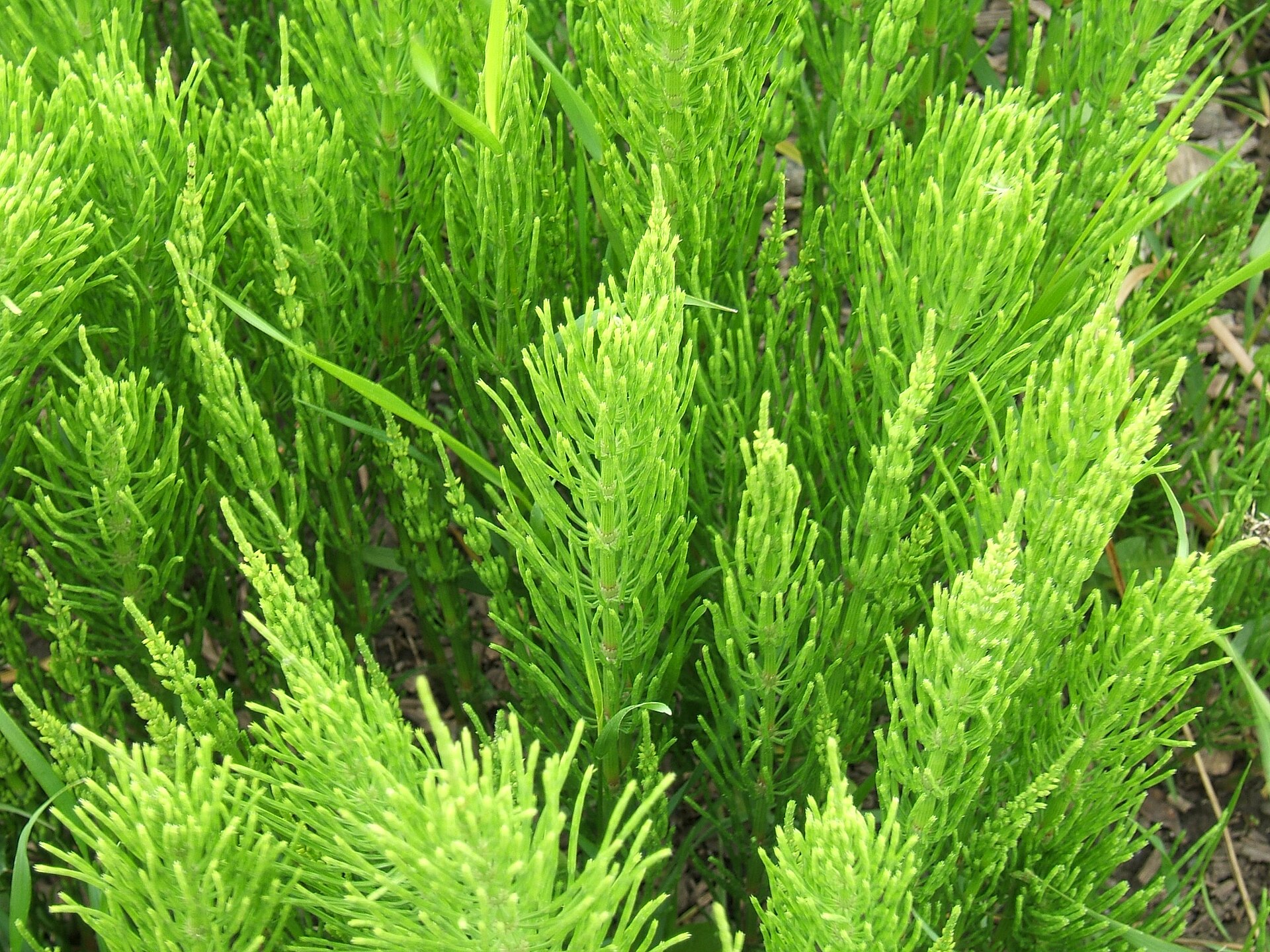
Traditionally used
⚠ Be sure of the species — a toxic look-alike (marsh horsetail) can be mistaken for it. Buy from a trusted source. Diuretic (urinary tract irrigation). Remineralizing (silica for nails, hair, bones). Topical: wound healing. Adjunct for kidney stones.
Prepared as
Sterile aerial stems (fresh or dried)
Chemistry
Silica (silicic acid — 5–8% of dry weight) — connective tissue support. Flavonoids (isoquercitrin) — anti-inflammatory, diuretic. Saponins (equisetonin).
In three languages
Kreyòl — ⚠ Asire w se bon espès la — gen yon plant ki sanble avè l ki toksik. Achte nan men yon sous ou ka fè konfyans. Diyrektik. Remineralizan (silik pou zonje, cheve, zo). Topik: swen blese. Sipò kalkil renal. Prèl chan itilize nan diaspora ayisyen pou wete dlo nan kò ak pou sipò zo ak cheve (silica). Rasin nan enfizyon pou sikilasyon urinè.
Français — ⚠ Vérifiez bien l'espèce — une plante toxique très ressemblante (prêle des marais) peut être confondue. Achetez auprès d'une source fiable. Diurétique (irrigation des voies urinaires). Reminéralisant (silice pour ongles, cheveux, os). Topique : cicatrisation. Adjuvant calculs rénaux. La prêle des champs est utilisée dans la diaspora haïtienne comme diurétique et reminéralisant (silice pour les os et les cheveux); racine en infusion pour la circulation urinaire.
Safety
Safety notes for this plant are still being written. Until they are, treat it with a cautious hand.
Plants can look similar and be misidentified — always verify with a local herbalist or guide before use.
Kept alongside
- Giant horsetail
- Castor oil plant
- Smooth Rupturewort
- Jamaican vervain
- Rosemary
- Purslane
- Rattlebox
- Birch
- Cabbage
- Pasqueflower