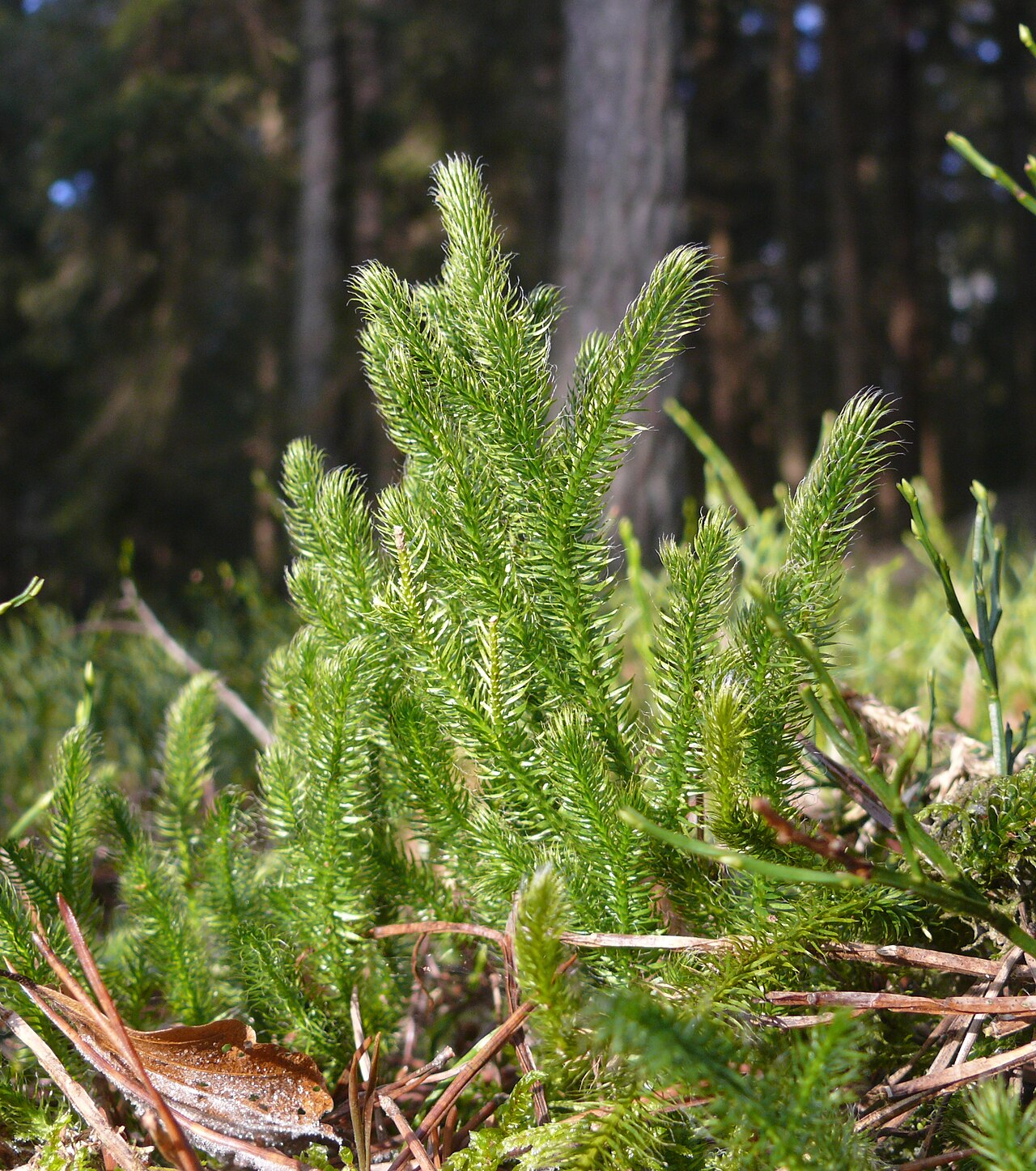
Club moss
Lycopodium clavatum · Lycopodiaceae
Club moss
Lycopode
Lycopodium clavatum
Lycopodiaceae
Traditionally used
⚠ The plant itself carries toxic alkaloids; only the fine yellow spore powder is used, and internal use is kept light. Club moss spores make a smooth, water-shedding dusting powder long applied to bedsores and weeping eczema in the very young and the old. Taken sparingly, a light preparation of the plant was used to nudge the kidneys and quicken a stalled metabolism, but it is not an herb to lean on.
In three languages
Français — ⚠ La plante elle-même renferme des alcaloïdes toxiques ; on n'utilise que la fine poudre jaune des spores, et l'usage interne reste léger. Les spores de lycopode forment une poudre lisse et hydrofuge, appliquée de longue date sur les escarres et l'eczéma suintant chez les tout-petits et les personnes âgées. Prise avec parcimonie, une préparation légère de la plante servait à stimuler les reins et à relancer un métabolisme ralenti, mais ce n'est pas une plante sur laquelle s'appuyer.
Safety
Safety notes for this plant are still being written. Until they are, treat it with a cautious hand.
Plants can look similar and be misidentified — always verify with a local herbalist or guide before use.
Sources & lineage
European phytotherapy / toxicology — spore fatty oil; alkaloids lycopodine, clavatine
Kept alongside
- Lady's Bedstraw
- Burdock
- Sheep's sorrel
- Giant horsetail
- Whitemouth dayflower
- Masterwort
- Frog fruit
- Creeping thistle
- Holly
- Smooth Rupturewort