Chinaberry (lila)
Melia azedarach
Chinaberry
lila
Lilas
Melia azedarach
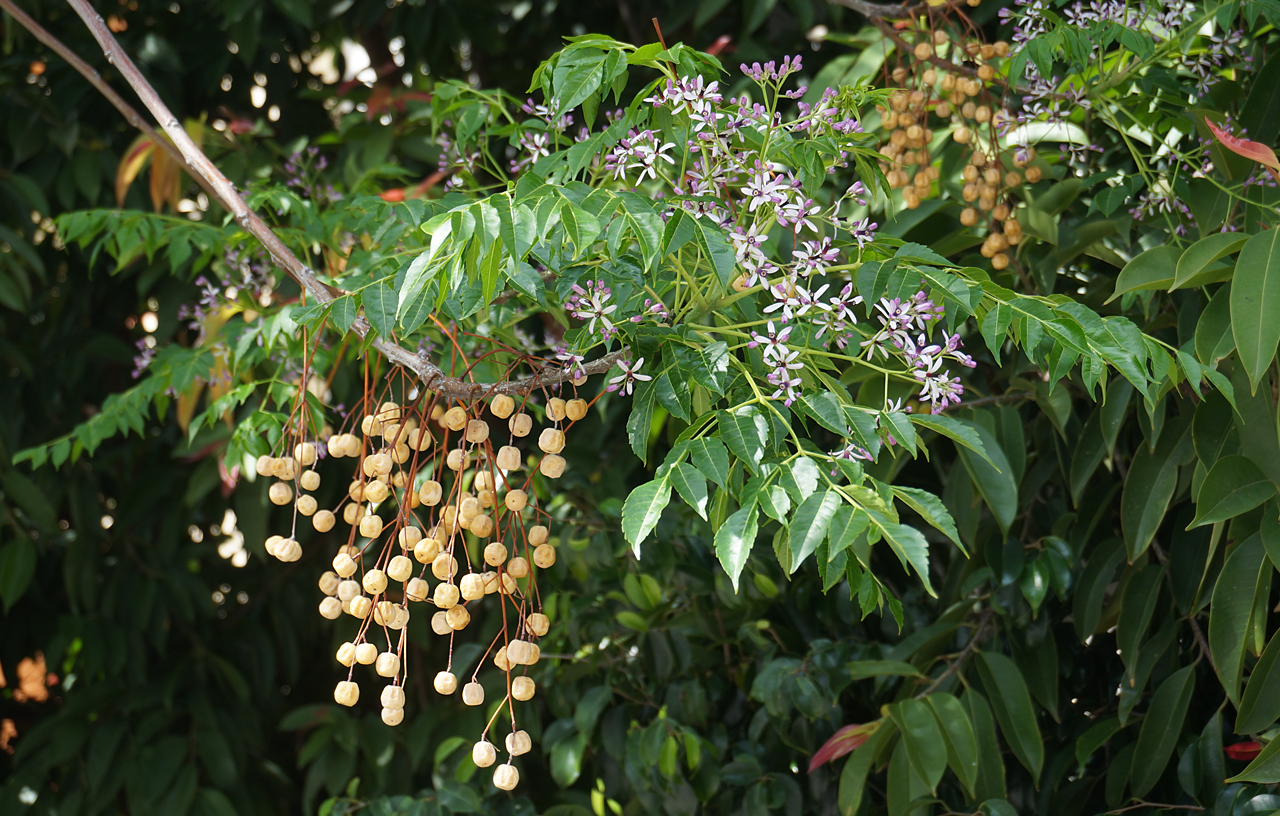
Traditionally used
⚠ The ripe fruit is poisonous and has killed children — never eaten, and kept away from little ones. Used mostly externally for parasites, intestinal worms, skin infections, inflammation, pain, and fever.
Prepared as
WARNING: all parts toxic in large doses. Bark decoction used externally as wash for skin infections and parasites — do not ingest. Leaf poultice applied externally to painful joints. Seed oil applied to scalp parasites. Never use internally. Avoid contact with eyes. Wash hands thoroughly after handling. Keep away from children. Traditional use strictly external only.
In three languages
Kreyòl — ⚠ Fwi mi an se pwazon epi li deja touye timoun — pa janm manje l, epi kenbe l lwen timoun piti. Itilize sitou sou po a pou parazit, vè nan vant, enfeksyon po, enflamasyon, doulè, ak lafyèv.
Français — ⚠ Le fruit mûr est toxique et a déjà tué des enfants — jamais consommé, et tenu hors de portée des petits. Utilisé surtout en externe pour les parasites, les vers intestinaux, les infections cutanées, l'inflammation, la douleur et la fièvre.
Safety
WARNING: all parts toxic in large doses. Bark decoction used externally as wash for skin infections and parasites — do not ingest. Leaf poultice applied externally to painful joints. Seed oil applied to scalp parasites. Never use internally. Avoid contact with eyes. Wash hands thoroughly after handling. Keep away from children. Traditional use strictly external only.
Plants can look similar and be misidentified — always verify with a local herbalist or guide before use.
Kept alongside