Cassava (manyòk)
Manihot esculenta
Cassava
manyòk
Manioc
Manihot esculenta
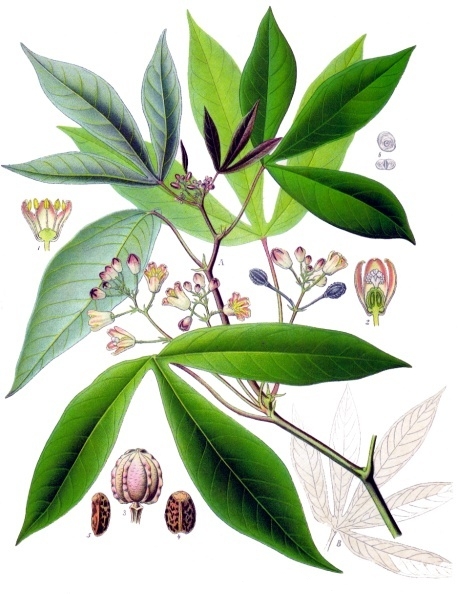
Traditionally used
⚠ Raw cassava is poisonous — it holds cyanogenic compounds and must be peeled, soaked, and thoroughly cooked before eating. Once correctly prepared, valued for nourishment and energy, and used in poultices for skin, digestion, and wounds.
Prepared as
Leaf tea: boil young leaves 10 minutes, drink as vegetable broth for nutrition. Starch poultice: mix cassava starch with water, apply to burns and wounds for cooling. Fermented cassava eaten as probiotic food. WARNING: raw cassava contains cyanogenic compounds — always cook thoroughly before eating. Leaf tea safe when leaves are boiled 15 minutes minimum.
In three languages
Kreyòl — ⚠ Manyòk kri se pwazon — li gen konpoze syanojèn epi fòk ou kale l, tranpe l, epi byen kwit li anvan w manje l. Yon fwa li byen prepare, li gen valè pou nourisman ak fòs, epi yo itilize l an kataplas pou po, dijesyon, ak blesi.
Français — ⚠ Le manioc cru est toxique — il contient des composés cyanogènes et doit être épluché, trempé et bien cuit avant d'être consommé. Une fois correctement préparé, apprécié pour la nourriture et l'énergie, et utilisé en cataplasme pour la peau, la digestion et les plaies.
Safety
WARNING: raw cassava contains cyanogenic compounds — always cook thoroughly before eating. Leaf tea safe when leaves are boiled 15 minutes minimum.
Plants can look similar and be misidentified — always verify with a local herbalist or guide before use.
Kept alongside