Bosnian lily · Bosanski ljiljan (Zlatni ljiljan)
Lilium bosniacum · Liliaceae
Bosnian lily
Lilium bosniacum
Bosanski ljiljan (Zlatni ljiljan)
Lilium jankae
Liliaceae
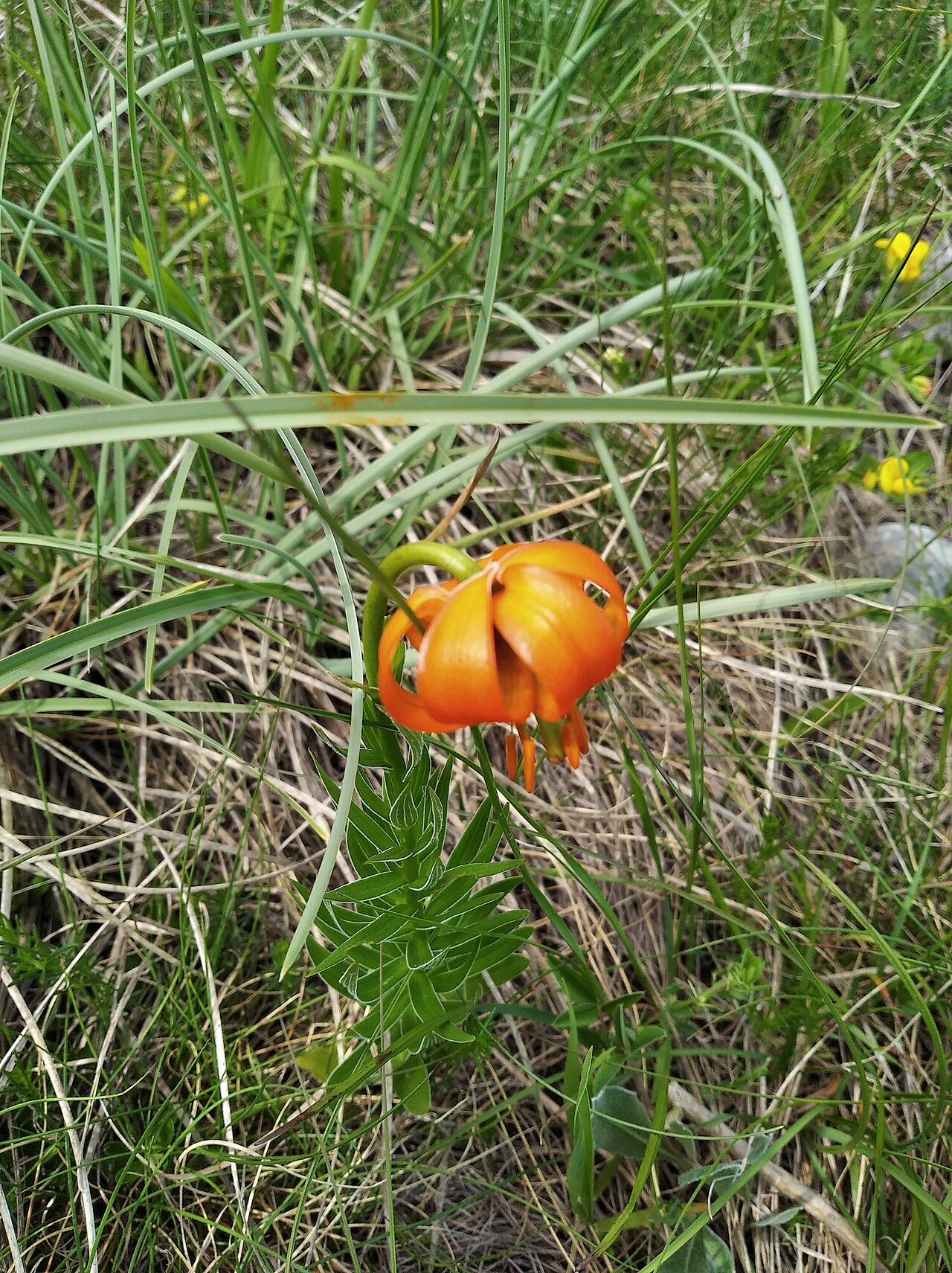
Botanical note
Endemic to the Dinaric heights and on the BiH Red List — Bosnia's national flower. A golden bulbous perennial blooming late June to early August. It rises in Sutjeska National Park, on Maglić and Zelengora, on Prenj, and by Prokoško Lake.
Traditionally used
The endemic lily of the Dinaric heights and Bosnia's national flower — carried here for its place in the landscape and its ceremony more than the still-room. Across the genus, and its close kin the Madonna lily (Lilium candidum), the bulb and petals were laid in poultices for burns, ulcers, and skin slow to heal. ⚠ Not a plant to take by mouth.
Prepared as
⚠ External tradition only — a poultice of the mashed bulb or petals on intact, unbroken skin, after the manner of the Madonna lily. Do not ingest: lilies cause stomach upset in people and are lethally toxic to cats. Keep from animals.
Safety
Safety notes for this plant are still being written. Until they are, treat it with a cautious hand.
Plants can look similar and be misidentified — always verify with a local herbalist or guide before use.
Sources & lineage
Lilium candidum folk materia medica (poultices for burns/ulcers — Dioscorides & Pliny lineage; MDPI Plants 2020), applied here to the allied endemic. Toxicity: Pet Poison Helpline — lethal to cats; mild GI upset in humans.
Kept alongside
- Edelweiss
- Dwarf mallow
- Field marigold
- Clary sage
- Tormentil
- Bird cherry
- Cross gentian
- Salad burnet
- Tobacco
- Garden angelica